
Manthey GT3 RS Rear-View Camera Kit

Manthey Racing / Aftermarket
Automotive & Motorsport
Glass-fiber reinforced nylon (~25% filled)
3 weeks concept to installed hardware
The problem
The Manthey aero conversion replaces the rear glass with a carbon fiber panel, eliminating rearward visibility for street driving. No OEM or aftermarket solution existed to restore continuous rear-view without permanent modification.
Constraints
Must withstand sustained 250+ km/h speeds, extreme vibration, UV, and direct sunlight. No drilling or permanent modification to the vehicle. Must integrate visually with the Manthey aero package and preserve aerodynamic function.
The engineering problem
This wasn’t a simple camera mount. The Manthey conversion on the 992 GT3 RS replaces the factory rear glass with a carbon fiber panel and vertical fin assembly — maximizing aero performance but completely eliminating rearward visibility during normal driving.
The challenge was developing a solution that worked within several hard constraints simultaneously: no permanent modifications to a six-figure vehicle, aerodynamic sensitivity on every rear surface, OEM-level visual integration, and materials that could handle long-term exterior automotive service.
Scan capture and geometry development
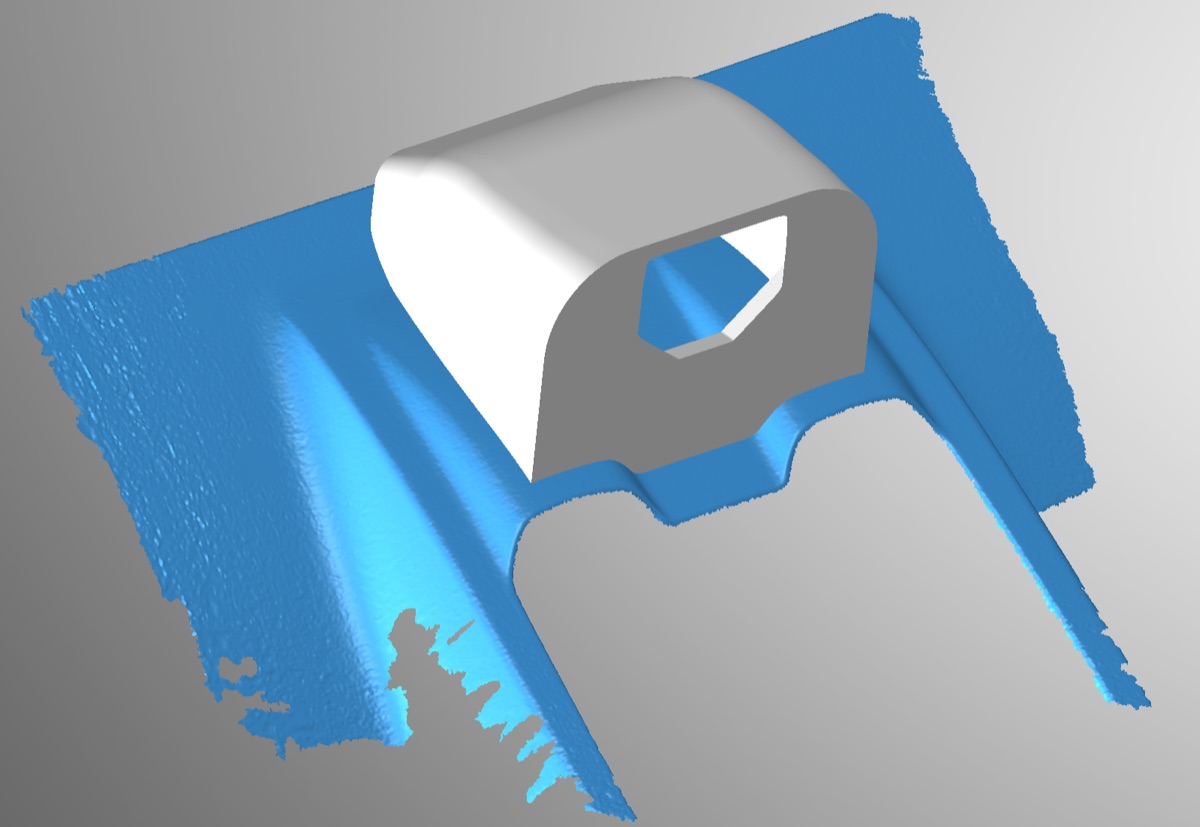
We started by scanning the rear deck lid area to capture the exact mounting surface geometry, surrounding contours, and spatial relationship to the central fin. This scan data became the foundation for all CAD work.
Working against actual vehicle geometry — rather than approximations — meant the housing could be designed as a conformal component that sits naturally within the compound curvature of the rear bodywork.
Concept exploration
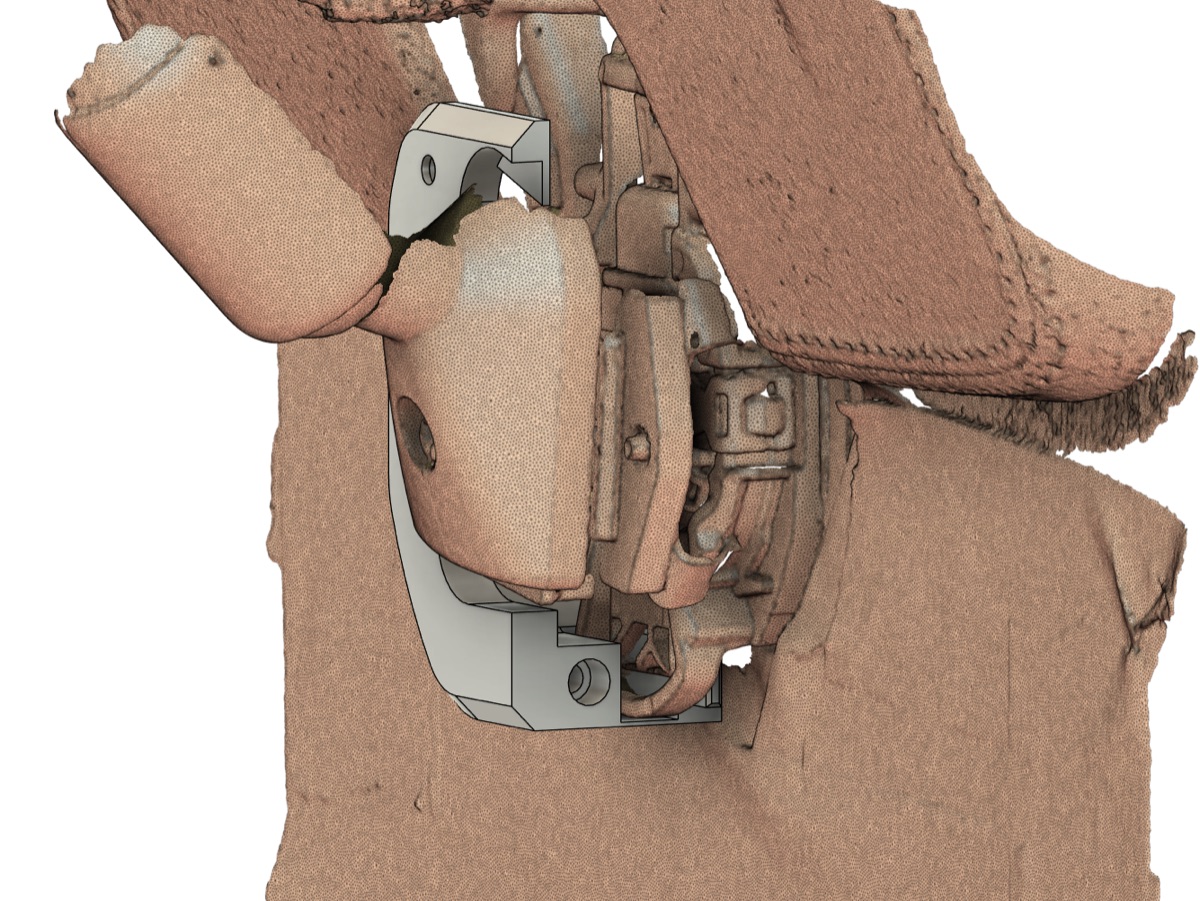
Several mounting locations were evaluated: license plate area, rear bumper, external brackets, and the deck lid beneath the fin. Each was assessed against visibility, installation complexity, cable routing, visual integration, and aerodynamic exposure.
The deck lid position beneath the fin proved strongest — offering the best rearward perspective, centerline symmetry, clean cable routing, and minimal visual disruption.
Iterative prototyping
The design went through 14+ iterations, each 3D printed and physically test-fit on the vehicle. Revisions addressed camera angle, housing profile, mounting method, cable exit path, clearance to surrounding geometry, and visual balance from multiple viewing angles.
This rapid prototyping loop was critical. Small changes in angle or section thickness have an outsized impact on both perceived fit and functional performance. CAD alone doesn’t resolve these problems — physical validation does.
Materials and production
Final parts were produced in glass-fiber reinforced nylon (~25% filled) for its combination of thermal resistance, stiffness, durability, and suitability for exterior automotive service. Parts were finished with automotive-grade clear coat for appearance and UV protection.
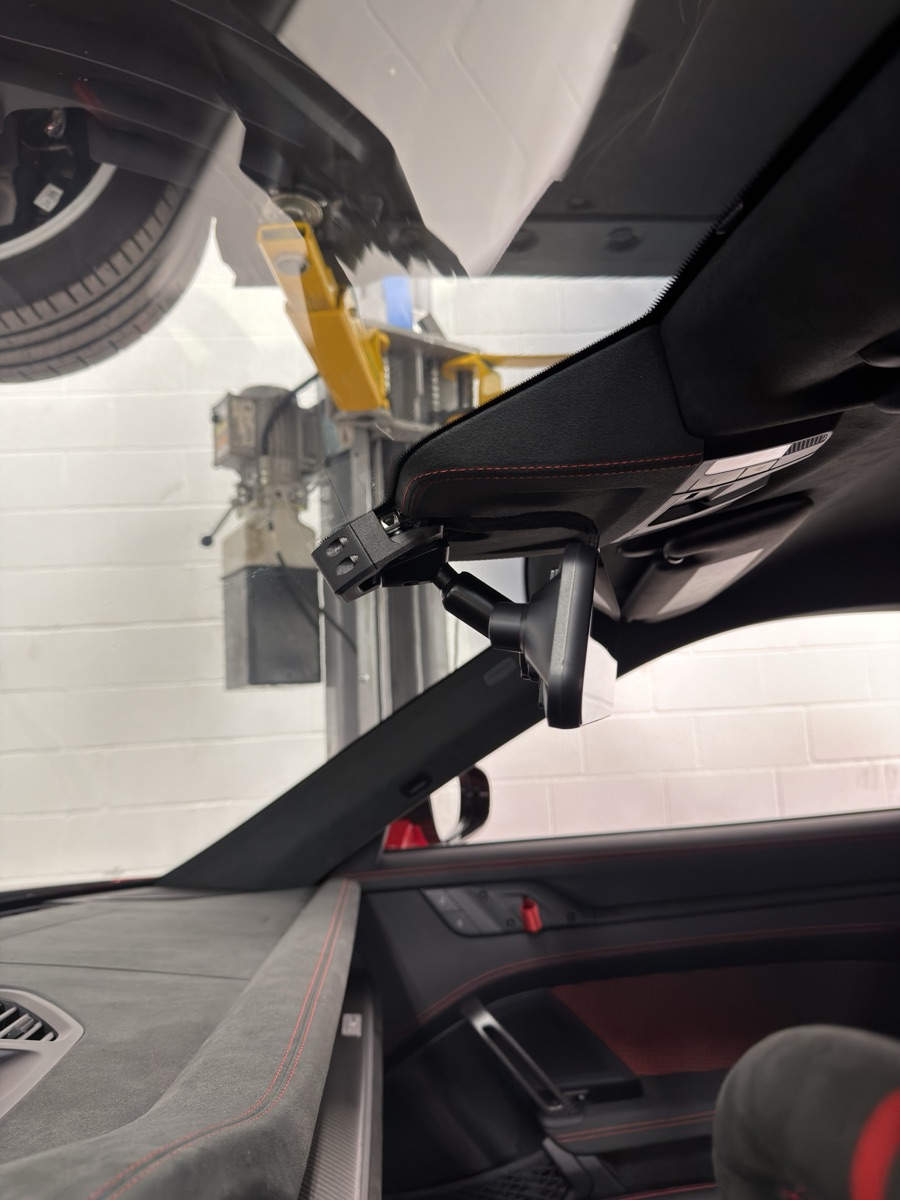
The interior mirror mount was reverse-engineered from a 3D scan of the factory Porsche mirror interface — ensuring proper load distribution, clean installation, and OEM-style mounting strength with no windshield modification required.
The installed system
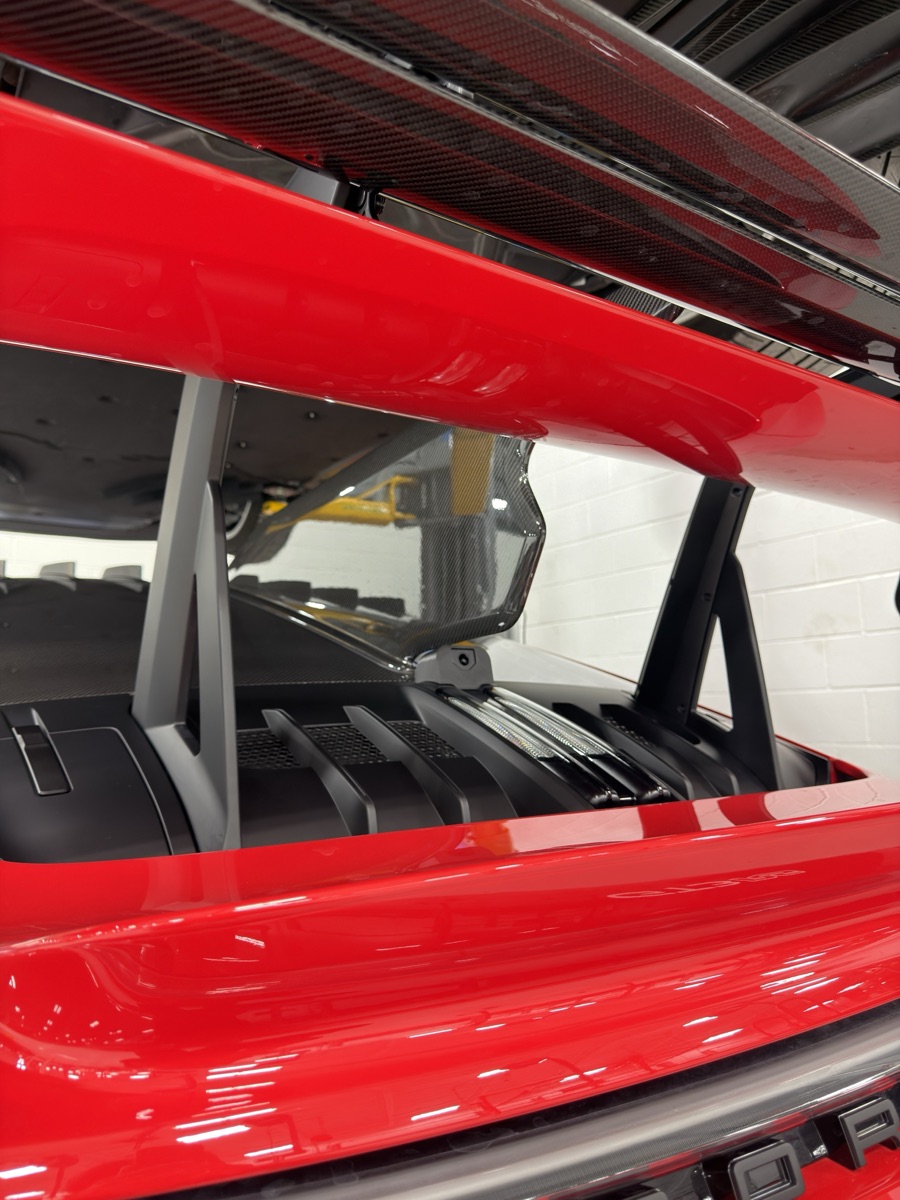
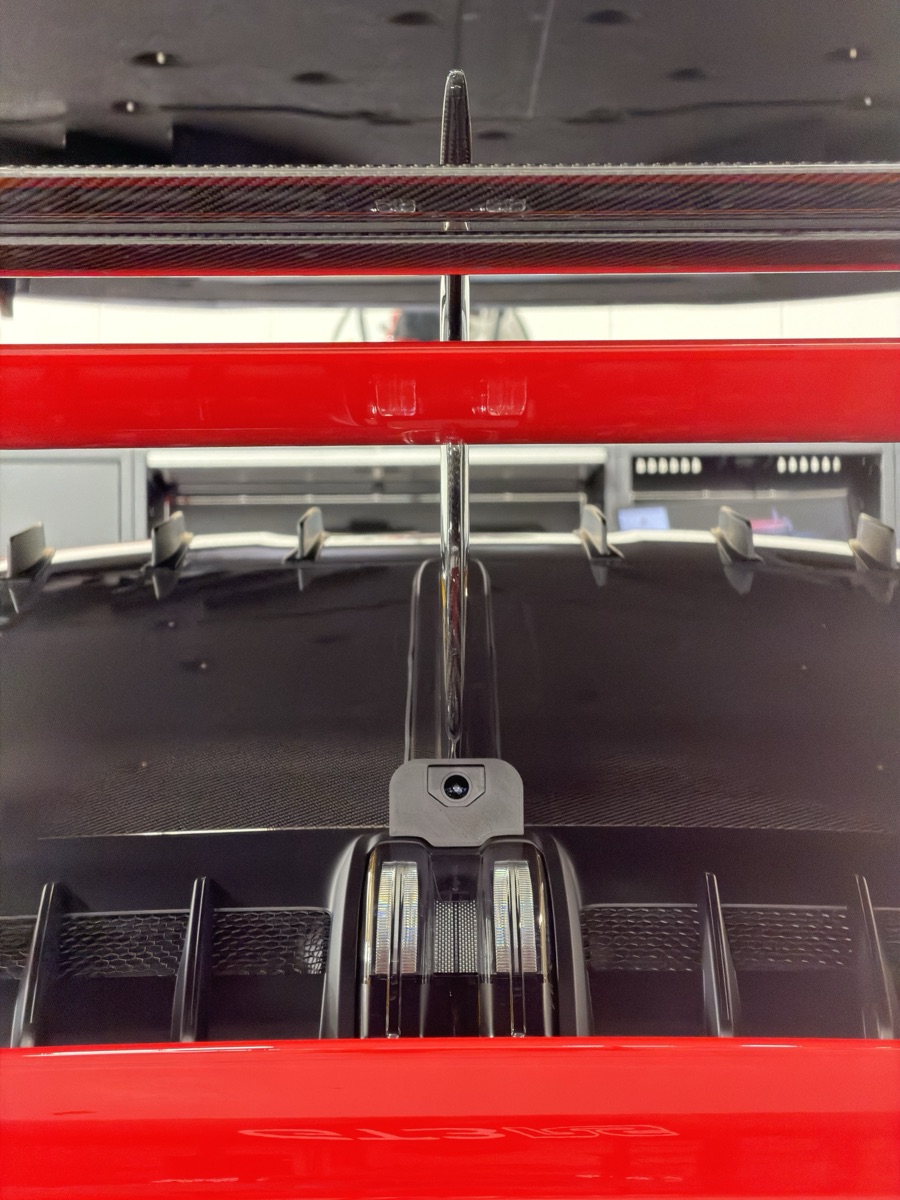
The completed system restores continuous rear visibility without compromising the functional intent of the Manthey aero package. Fully reversible. No permanent modifications. Production-ready geometry developed for repeatable manufacturing.
Most importantly — it reads as a component that belongs on the vehicle, not something bolted on afterward.
The result
A complete rear-view camera system that restores continuous rearward visibility, installs without permanent modification, and reads as an OEM-integrated component rather than an aftermarket add-on.